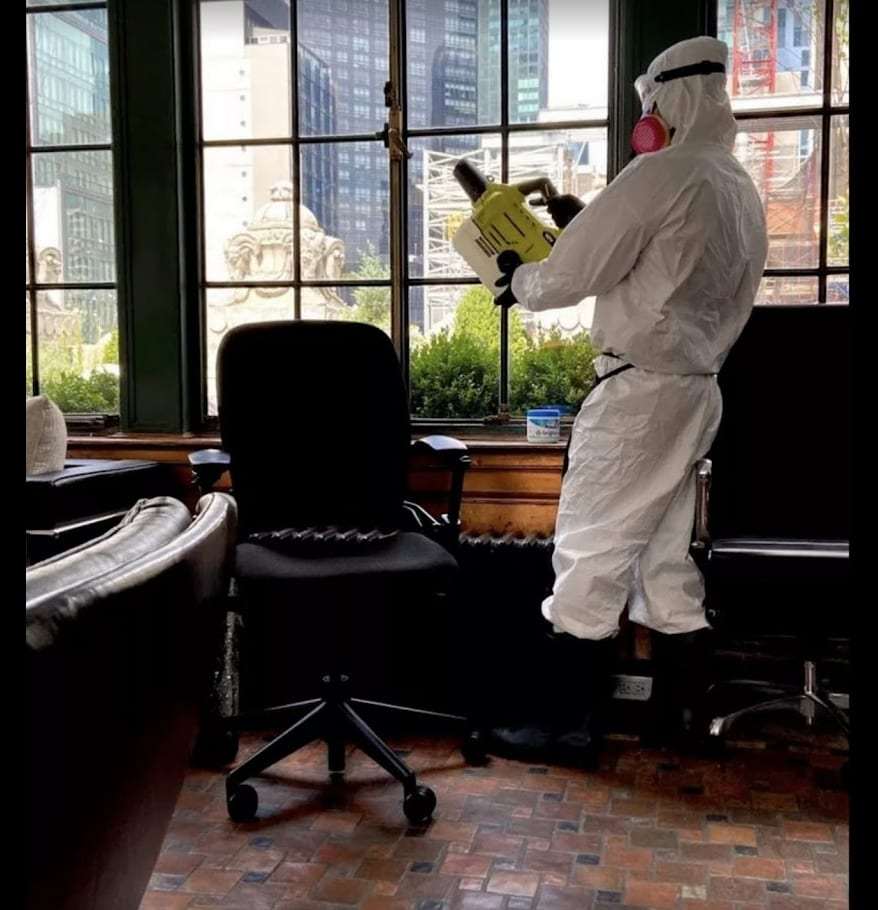
Technician in a protective suit fogging an office to treat odor. A representative photo of the task, not a record of work at any particular property.
Why a cigar room is its own kind of problem
Larger houses around Cherry Creek, Country Club and Belcaro often have a study, library, basement bar or detached garage that served as the cigar room for decades. Cigars and pipes are usually smoked slowly and indoors in one spot, so the room gets a heavy, uneven coating while the rest of the house may smell only faintly.
Cigar smoke tends to leave a darker, oilier film than cigarette smoke and a sweeter, heavier odor that people describe as leathery or earthy. It soaks into the same places every time: the ceiling above the chair, the drapes nearest it, upholstered leather, rugs, and any open-grain wood such as raw shelving or the back of built-ins.
The upside of a concentrated source is containment. If the room is isolated during cleanup, the rest of the house usually needs much less work.
Cigar room versus whole-house cigarette smoking
Dedicated cigar or pipe room
- Very heavy residue in one or two rooms
- Leather, wool rugs and drapery usually the worst offenders
- Door and nearby return vent often show a visible stain trail
- Rest of the house may need only light cleaning and duct attention
Cigarettes smoked throughout
- Moderate residue spread across every room
- Ceilings, kitchen cabinets and closets all affected
- Whole duct system likely contaminated
- Scope is broad, so sequencing the rooms matters more
Working a cigar room from the top down
Close it off
Keep the door shut, cover the supply and return grilles in that room temporarily, and run the furnace as little as possible until the room is cleaned, so residue is not pulled into the rest of the system.
Remove soft goods
Drapes, throw pillows, rugs and loose cushions come out first. Decide early which items are worth professional cleaning and which will never lose the smell.
Clean the ceiling and walls
Start at the ceiling, which usually holds the most residue, and work down. Brick and stone fireplace surrounds may need different cleaners than painted drywall.
Address wood and built-ins
Finished wood is usually cleanable. Raw backs of shelves and drawer boxes may need sealing with a shellac-based primer where they are not visible.
Deal with the air path
Clean or have the branch ducts serving that room cleaned, then let the room sit closed and re-check the odor before any whole-space treatment.
Seal and refinish last
Only after the room passes a closed-up smell test should painting or refinishing start.
Common questions
Can leather club chairs from a cigar room be saved?
Sometimes. Finished leather can often be cleaned and conditioned, but the cushions and padding underneath absorb the most odor. A leather or upholstery specialist can tell you whether reupholstering the inner cushions is the realistic option.
General information for Cherry Creek, not a quote or professional advice. In an emergency, call 911.